
Swelling after Exercise -- Is It Really a Setback?
Feb 15, 2026Swelling After Exercise: Is It Really a Setback? Let’s talk about it.
This concern comes up all the time in the clinic, and it usually sounds a little something like this:
“I did ___ and my knee swelled up. I had to stop everything and rest for a whole week.”
That blank in the sentence is intentional.
What goes there often feels important, but in most cases, it actually doesn’t change the big picture. Whether it was a hike, a lift, a run, or a long day on your feet, swelling was likely going to happen anyway. And that doesn’t mean something went wrong.
Here’s why.
Swelling Is a Normal Part of Tissue Adaptation
Swelling (inflammation) is normal. it’s your body working. It’s not alarm bells going off, nor does it signal any potential or actual tissue damage.
It’s a normal response involved in:
- Bone integrity and remodeling
- Muscle repair
- Connective tissue strengthening
All tissues adapt by responding to stress. When you load them, especially after injury or time off, your body sends inflammatory cells, proteins, and chemical signals to the area. These help regulate repair, increase tolerance, and prepare the tissue for future demands.
In other words: inflammation is PART of the plan. Not the enemy.
Timing of Swelling Matters
If you were able to complete the activity and felt good during it, and swelling showed up later, that’s typically a normal recovery response!
That’s your body saying:
“Okay, that was new or challenging, so now I need to learn how to handle it.”
If anything, this is a sign your system is adapting so it can tolerate that activity better next time.
What If Swelling Starts During Exercise?
That doesn’t automatically mean damage either.
It usually means the stimulus exceeded your current capacity.
What is capacity?
Capacity is your body’s ability to handle a specific load and still recover from it.
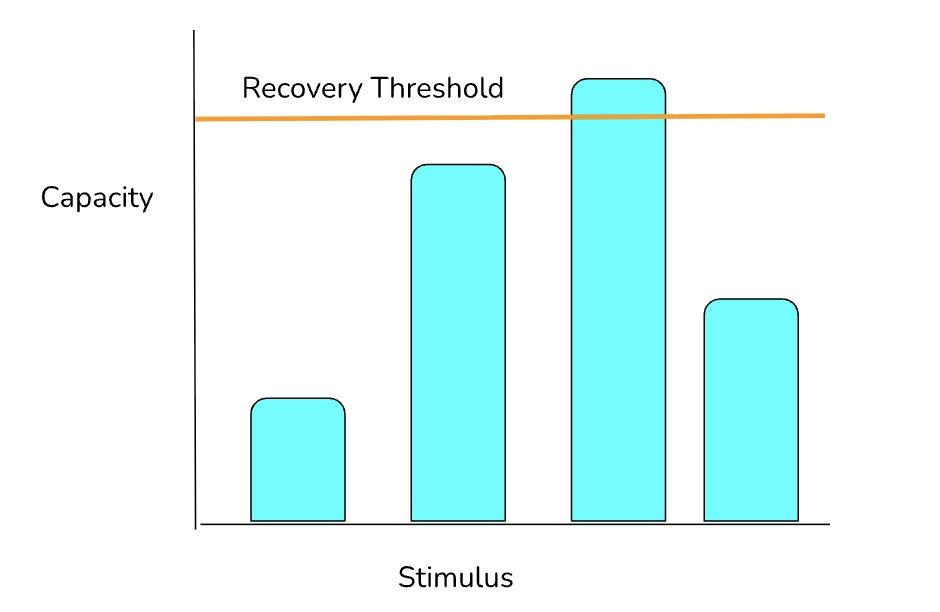
Take a look at the graph here. The orange line represents your recovery threshold. Essentially, the amount of stress your body can handle while still recovering efficiently.
When the stimulus stays below this line, recovery is usually quick, often within 24 hours. This might be a lighter lift, a shorter run, or a manageable training volume.
At times, the stimulus, such as heavier weight, more total volume, or longer duration, crosses above the threshold. When that happens, recovery simply takes longer. This is one of the situations where swelling may appear as part of the normal repair and adaptation process.
Swelling can also occur when the stimulus is very close to the threshold. In this case, recovery still happens relatively quickly, typically within 24–48 hours, but the body uses inflammation as part of the recovery and rebuilding process.
In both scenarios, swelling isn’t a sign of failure or damage. It’s a reflection of where the stimulus landed relative to your current capacity, and how your body is responding in order to adapt.
Exceeding Capacity ≠ Setback
Just because swelling shows up doesn’t mean:
- You hurt yourself
- You undid progress
- You need to stop everything and rest for a week
It simply means your body was exposed to a stimulus it’s still building tolerance for.
Yes, it can feel nerve-wracking. But in most cases, this is just normal physiology doing what it’s designed to do!
When to Pay Closer Attention (Red Flags)
While swelling is usually normal, reach out to a healthcare professional if you notice:
- Rapid, severe swelling with loss of motion
- Pain that continues to worsen over several days instead of improving
- Swelling accompanied by increased warmth, redness spreading, or night pain
Those are worth checking out.
Ready to learn more? Have specific pain problems that are limiting your performance goals? Czarbell is here to help. Reach out at [email protected], or schedule an appointment with me through the main page of this website, to learn more!
